

Treatment abroad: Serbia
Why choose Serbia for medical tourism?
Serbia, a rising destination for medical tourism, offers high-quality healthcare services at competitive prices, with specialties including dental care, cosmetic surgery, and wellness retreats drawing visitors seeking affordable and reliable treatment options.
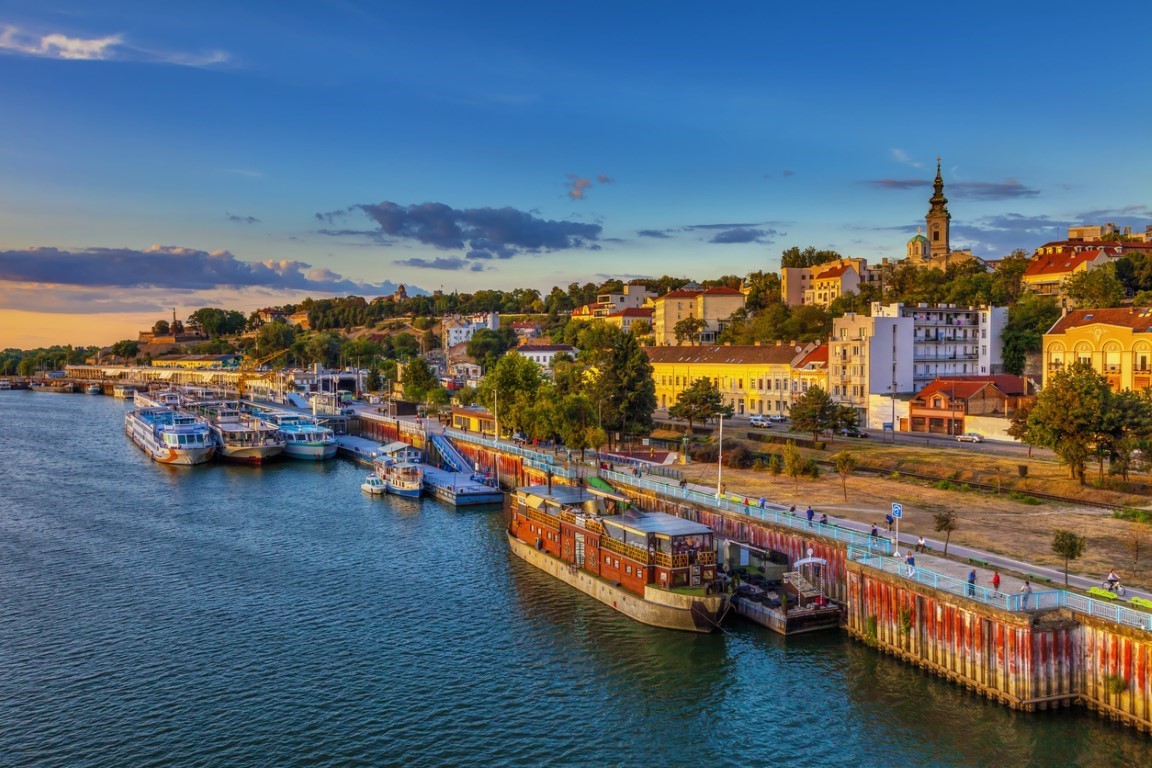
The continuing falls in the cost of global transport are making exciting new destinations affordable and popular. Situated in the heart of the Balkans, Serbia is bordered by Hungary to the north; Romania and Bulgaria to the east; the Republic of Macedonia and Albania to the south; and Croatia, Bosnia and Herzegovina and Montenegro to the west.
The country’s capital, Belgrade, was titled ‘City of the Future of South Europe’ in 2006. Although landlocked, Serbia has 2,000 km of navigable waterways on the Danube, Sava, Tisza and their respective canals, through which it forms part of a European canal network, connecting the North Sea with the Black Sea.
Private clinics are at the forefront of a Serbian initiative to attract foreigners with cheaper medical treatment and other benefits, like discovering the country’s sites or visiting its numerous thermal spas.
Direct flights to Serbia are available from London to Belgrade and Pristina.
Why consider Serbia
When you experience the hospitality and warmth of the local people, it’s hard to believe that Serbia was only recently torn apart by ethnic fighting that pitted family against family. And it is this unfailing kindness and openness that is one of the country’s biggest attractions.
For example, if you are asked to lunch, the biggest meal of the day, by a Serb, you will not have to pay for a single thing, not even drinks. They pride themselves on hospitality and looking after their guests, and this attitude runs throughout their society and is nowhere more obvious than in their healthcare.
Serbia deserves consideration partly because the country wants it so much. They are desperate to rejoin the mainstream, with an ongoing application to join the European Union making steady progress, and they see tourists, especially medical tourists, as a way of showing the world all that Serbia has to offer. They want to ensure that everyone leaves with a good experience of their country, becoming an ambassador that will encourage others to pay them a visit.
Serbia has a long tradition of welcoming healthcare tourists to their country. As far back as Roman times, people have been coming to Serbia for the thousand or more natural mineral springs and medicinal mud baths. Today there are more than three hundred and fifty thermal springs in over 50 resorts, all offering a huge range of complementary treatments. Vrnjacka Banja is the largest spa resort, and the only one where the mineral spas leave the ground at body temperature. These natural remedies make the perfect partner to the more modern medical treatments available at the numerous city centre clinics aimed at the healthcare tourist.
While the Serbian healthcare system may still be struggling, facilities for overseas visitors are top quality. Healthcare tourism is still in its infancy in Serbia, but it is growing rapidly, with expanding facilities to match including clinics for cosmetic surgery, dentistry, fertility treatment and weight loss procedures. Prices are still relatively low, to attract business and establish Serbia as a major healthcare tourism destination, with savings of around 50%-60% compared to other European countries or the United States
Combine this with stunning country retreats, where you can recover and recuperate amid fresh air and beautiful scenery, and you have the perfect recipe for a great value treatment trip.
Reasons to choose Serbia
Lots of new facilities to attract medical tourists
Low cost dental and cosmetic surgery treatments
Well trained doctors and surgeons
Many ancient health spa towns across the country
Belgrade is a city that doesn’t sleep
Serbia is the undiscovered gem of Europe
Serbian healthcare system
There are no two ways about it; the Serbian healthcare system is struggling to cope. While it was once of good quality, with free access under the old Yugoslavian system, it has been overseen by so many different governments over the last few decades that it has fallen into disarray and disrepair. In many areas of the country, healthcare has now reached the point where corruption is rife and many people have to bribe their way in to see a doctor or nurse.
Reforms to the system mean that healthcare should be more widely available and accessible, but is no longer free, with various levels of co-payment now the norm.
With the help and support of the World Health Organisation, Serbia is working hard to address its healthcare issues, and has implemented over 40 EU funded projects worth over 140 million to try and put things right. Serbia also allocates a generous 11% of its GDP to its healthcare budget. Nonetheless, it still ranked last in the 2012 European Health Consumer Index, with underfunded facilities and underpaid staff.
This situation has forced many Serbians to take out private medical insurance, effectively paying for the care they used to get for free. This in turn has created a thriving private sector, with world-class facilities, well trained doctors and surgeons, and state of the art modern clinics, in stark contrast to the state system. This high quality private sector is one of the reasons that Serbia is climbing rapidly up the league of European medical tourism destinations. However ineffective the state reforms are to public healthcare, you can rest assured that as a medical tourist, the care you will receive will be of the highest standard, and the facilities equal to any in Europe.
Another good reason behind Serbia’s success is the combination of low treatment costs and friendly, welcoming staff. The fact that most clinics also speak English is an added bonus for many European and especially American healthcare travelers.
Transport and accommodation
Serbia’s main international airport is Belgrade Nikola Tesla Airport, located around 12 miles from the city centre. Belgrade is served by most major airports, with a flight time of just two or three hours from mainland Europe and around nine hours from New York. Belgrade is served by a number of budget airlines, with flights from the UK from as little as £40 one way, and flights from Paris starting as low as 20 if you can be flexible on times and dates. Flights from New York start at around $700 return.
To reach the city from the airport, you can take an express minibus at around 2.50. Taxis from the airport operate a fixed fee system, currently set at 15, with a journey time of around half an hour.
Travelers from Europe may opt to take the train into Serbia rather than fly, with a good network of connections across the Baltic States and beyond. Trains in the region are not known for their punctuality, or for their comfort, with much of the rolling stock somewhat outdated. The same is true for trains within Serbia itself, with most passengers preferring to take long distance buses to get around the country.
Within Belgrade there are numerous transport options, including trams, trolleybuses and taxis, although the city is compact enough to walk around, and you will be rewarded with some spectacular sights.
Accommodation in Serbia is not quite up to the standard that many Europeans have come to expect, although it is improving to meet demand as tourists come back to the country. Prices in Belgrade tend to be more expensive than elsewhere, as rooms are more in demand, so if you can find your treatment in one of the other Serbian cities, you will save even more on your trip. Even so, you can still find a top rated hotel in Belgrade for under £100 / 120 / $160 per night, with lots of cheaper options also available.
Serbia: About the country
Despite its turbulent recent history, Serbia is a friendly, welcoming place to visit, with much to offer those with the open mind and sense of adventure to give it a try.
Embroiled in the Balkan wars of the 1990s and not formed as a separate country until as late as 2006, Serbia is now a safe and secure place to visit as it fights its way back from the troubles of the past, both military and economic. Bordered by all five of its fellow former Yugoslav republics, as well as Bulgaria, Romania and Hungary, Serbia has many different cultural and ethnic influences, creating a varied and fascinating society rich with customs and traditions and fierce with national pride.
The capital, Belgrade, is a highly popular destination for both medical tourists and anyone else who wants to have a good time. This is a city that doesn’t sleep, with a nightlife that is famous across Europe. Recommended by many of the leading travel guides as a city full of fun, Belgrade doesn’t just party at the weekend, and it can be hard to tell what night it is from the raucous crowds in the city centre.
Other cities across Serbia reflect its position at the crossroads of East and West, with Nis blending oriental influences, while Subotica in the North has all the baroque charm of a classic Central European city.
Away from the cities, Serbia is full of surprises. It may not be internationally known for its wines, but that is only because they are produced on a small scale by individual vineyards. The emphasis here is on quality over quantity, and these boutique vineyards are well worth seeking out on the many ‘wine routes’ drawn up by the tourist board.
Similarly, Serbia does not share the same reputation as Austria or Switzerland when it comes to skiing and ski resorts, yet for those in the know, Kopaonik is one of the finest ski resorts in Europe. The fact that it is such a well kept secret only serves to make it better, with none of the crowds of the more well known slopes. Skiing or not, the mountainous interior of Serbia is a must on any visit, with beautiful peaks and lakes at every turn.
Yet because of the recent troubles, and its continuing struggle to establish itself within the region and within Europe as part of the EU, Serbia remains an undiscovered gem that rewards those that look forward instead of back. It will be a leading tourist destination in the near future, complete with the crowds, so make sure you get there soon and enjoy unspoiled Serbia at its natural best while you still can.
Clear, practical advice on costs, options, safety and how to choose. Start with the essentials, then dive deeper.
Read the guide