

Treatment abroad: Lithuania
Why choose Lithuania for medical tourism?
Lithuania, a rising destination for medical tourism, offers top-quality healthcare services in fields such as cardiology, oncology, and cosmetic surgery, attracting patients with its advanced facilities and skilled medical professionals.
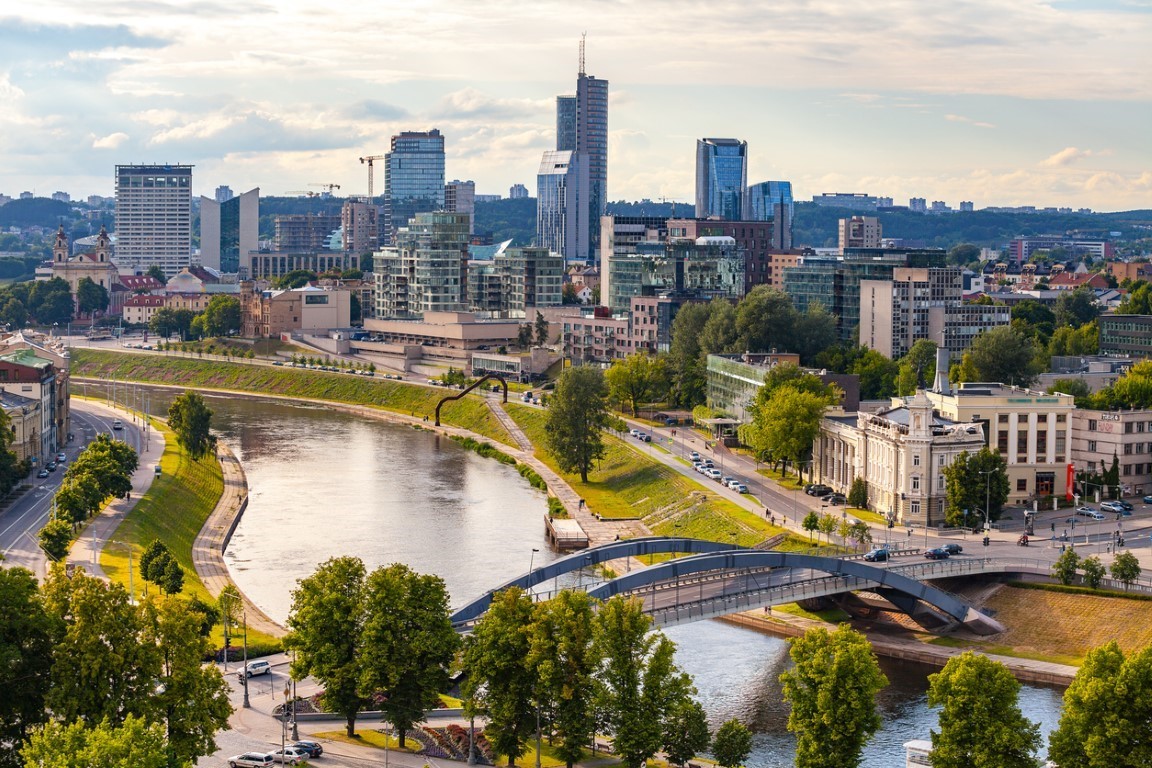
Lithuania is a bit of an undiscovered gem. Further north that you would expect, the summer climate is very pleasant if you are travelling there as a medical tourist to take advantage of the medical expertise in cardiology, cosmetic surgery or dentistry. The cost of procedures are much lower than western Europe or the USA and the cost of a holiday there, whether for medical tourism or not, will surprise you.
Why consider Lithuania for medical tourism?
The biggest attraction of Lithuania has to be the cost. Once you are there it is very affordable to eat, drink and get around and the prices from private clinics for medical treatment are extremely competitive. Even with the cost of a long-haul flight to get here, you will save money on US prices. Come from within Europe on a low-cost airline and you will probably pay for your treatment and your holiday for less than your procedure would have cost at home.
Lithuania has a good public health system, with almost all citizens covered by free, state provided healthcare. This means that the private sector has to offer the very finest in facilities to attract people to spend that bit of extra money on private health insurance. It also means that much of the business of these clinics comes from overseas medical tourists, so the facilities are very much geared to the visiting patient, rather than visitors being squeezed in alongside the locals.
Bring together a very low cost of living with excellent private healthcare provision, and you have a winning combination. Since doctors and other medical staff do not need to earn anything like the salaries of their European or American contemporaries, the clinics don’t have to charge nearly as much. In fact, prices in Lithuania can be as low as 25% of the cost in other countries.
Another big advantage of medical tourism ton Lithuania, is the quality of life for resting before and recuperating after you treatment. The vast, unspoiled countryside and deserted sandy beaches are the perfect location to recover, while the many spas and natural springs will leave you feeling fully revitalised. The Lithuania Baltic Sea resorts of Neringa and Palanga are especially well known for their wellness and treatment industries.
Combining a holiday with your healthcare makes great sense in Lithuania, with so much to see and explore while you are there. The mild summers don’t get too hot, yet are pleasantly warm, while the rather colder winters add an undeniable charm to the old towns, as snow and frost bring out the best in these picture postcard scenes.
Whenever you visit, and however long you stay, you’ll find a warm welcome, modern facilities and infrastructure, and an innocent charm about Lithuania – a country of the past that has a very bright future.
Reasons to choose Lithuania
Affordable cosmetic surgeryand dental treatment
Highly qualified and experienced surgeons
One of the fastest growing economies in Europe
Excellent value for money, even in the cities
Countless restorative spa resorts and mineral springs
3,000 lakes and endless forests in the interior
The healthcare system in Lithuania
Lithuania has an excellent modern state healthcare system, funded by the government through a national health insurance scheme. All employers must register employees to the scheme, and their family members will then automatically be covered. Disadvantaged groups, such as the elderly and the long term sick, do not have to contribute but are still covered by the scheme.
Healthcare, including emergency treatment, is free at the point of delivery, with the standard system of GP referrals for non-urgent cases. European citizens carrying the EHIC card can get free access to healthcare in Lithuania on production of their card and their passport.
The standard of some local hospitals may still be poor, but this is more than compensated for by the high doctor to patient ratio one of the best in the world. The city hospitals tend to be far better, and the general standard of healthcare facilities in Lithuania is improving as the government prioritises funding for health. Naturally, the private healthcare facilities, especially those aimed at the medical tourist market, are even better still.
Doctors train for six years and have to undertake at least one year’s internship before they are fully qualified and can specialise. Many medical staff, especially doctors, have trained overseas in the US or Western Europe.
Lithuania is proud of its standard of healthcare, and boasts an infant mortality rate lower than much of Western Europe.
Private healthcare is rare for Lithuanians, with few locals able to afford the cost; however, private clinics for medical tourists are a growing industry in the country. These clinics have to be of the very highest standard to compete, and so have state of the art equipment and highly qualified, multi-lingual staff. Now that Lithuania is part of the European Union, these clinics also have to meet strict EU standards.
Cosmetic surgery is the most popular treatment for visitors to Lithuania, with many also making the trip for low cost dental work (around 80% of Lithuanian dentists are in private practice). Lithuania is also a top centre for cardiology in Eastern Europe.
Lithuania: Travel and Accommodation
Lithuania’s main airport is Vilnius International, which has links to most major European cities as well as connections to the USA and beyond. A number of budget airlines fly to Lithuania from cities like London and Paris, with prices as low as 50 one way if you can be flexible with your travel times. If you are prepared to travel to a different airport, such as Kaunas, outside of the capital, then you could have more choice and even lower fares. Airlines such as Lufthansa and SAS fly to Lithuania from the United States, via European hubs such as Berlin and Heathrow.
Lithuania is between 2 and 3 hours flying time from most Western European cities, and anything from 9 to 12 hours from the USA. Its Northern European location makes it an arduous trip by any other means such as train or road if you are coming from France, Germany the UK or Spain.
Travelling within Lithuania is easy, with a modern infrastructure of roads and some rail links. Major roads linking the towns tend to be four lane dual carriageways, and there is also an extensive motorway network. Most of Lithuania’s rail network is used for freight, although it will host part of the Rail Baltica line, which when complete will link Germany and Poland in the west, via the Baltic states, to Finland.
Accommodation is cheap and plentiful, with new boutique hotels opening to meet the demand from European weekend tourists. Rooms start from as little as 60 per night. There are also numerous smaller guest houses, especially in the old towns, where the warm Baltic hospitality can be more genuinely felt. Holiday apartments in Lithuania can be found for as little as 40 per night. Eating out is incredibly cheap and wherever you stay, don’t miss the Cepelinai, a local delicacy of potato dumplings packed with cheese, meat or mushrooms.
Lithuania: About the country
Lithuania is a Baltic state which lies on the Baltic Sea, neighbouring Latvia, Belarus, Russia and Poland. One of Europe’s oldest countries, it was also once its largest. The first Soviet state to formally declare independence in 1990, Lithuania today has one of the fastest growing economies in the European Union, and this is reflected in the improvements to everything from transport infrastructure to medical facilities.
Lithuania is a beautiful and very old country, with more than 30 towns over 750 years old. Almost everywhere you go you will find stunning examples of well preserved gothic, classical and baroque architecture, and nowhere more so than in the capital, Vilnius. European Capital of Culture 2009, Vilnius has a beautiful old town, with the 16th century university particularly worth a visit for its historic courtyards and renaissance buildings. Watching the world go by from one of the timeless pavement cafes of Vilnius is one of the great pleasures of the city.
Yet Lithuania is no forgotten relic; the country has efficient roads and motorways and an improving international rail system, as well as modern airports with quick and cheap connections across Europe. And it’s not just the getting there that is cheap; the cost of living in Lithuania is incredibly affordable, making it a great value place to visit. A meal out in a restaurant will cost little more than 5 and local buses less than 1 each way.
Away from the cities, Lithuania has much to offer, with a rolling landscape of hills punctuated by almost 3,000 lakes and miles of Northern European forests, which cover around a third of the countryside. Much of the coast is protected by the huge Curonian Split, which separates the Curonian Sea from the wilder Baltic, creating safe sandy beaches. That said, with summer temperatures peaking at around 62oF (16oC) it’s not exactly a sunbathing hotspot.
Lithuania takes life very easily, with countless natural spas and springs. The towns of Birstonas and Druskininkai are especially well known for their restorative mud baths and mineral springs, which, if you believe the folklore, have remarkable healing powers for a range of ills.
As a former Soviet Bloc country in chilly Northern Europe, Lithuania may not be the first destination to spring to mind when considering medical tourism, but dig a little deeper and you’ll find yourself pleasantly surprised.
Clear, practical advice on costs, options, safety and how to choose. Start with the essentials, then dive deeper.
Read the guide