

Treatment abroad: Romania
Why choose Romania for medical tourism?
Romania, a burgeoning destination for medical tourism, offers exceptional healthcare services in fields such as dentistry, fertility treatments, and cosmetic surgery, with a unique blend of quality care and affordability attracting patients from around the world.
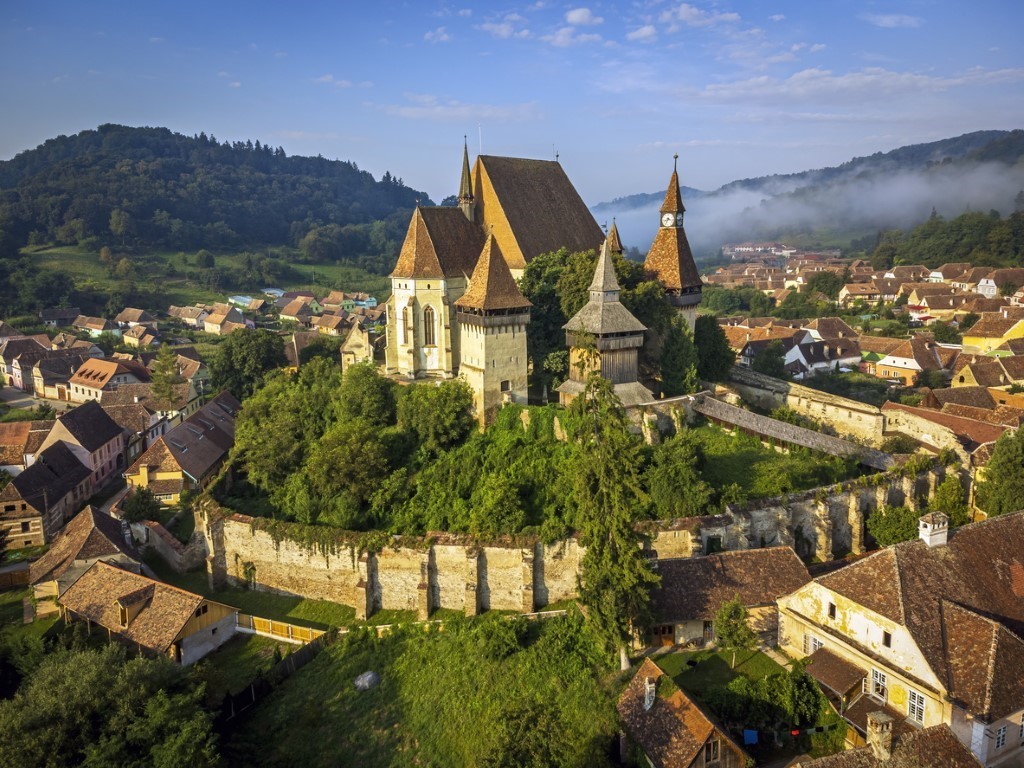
Romania, like many eastern European countries, is becoming increasingly popular as a destination for medical tourists from all over the world. The private healthcare sector is well organised, prices are attractive and the wellness-spa culture makes Romania an ideal location to relax and recover.
Why consider Romania for medical tourism?
After over 40 years of communist rule, including almost a quarter of a century under the Stalinist regime of Nicolae Ceaucescu, Romania broke free in 1989, and today welcomes foreign visitors with open arms as it retakes its place on the world tourist stage. And there is so much to see and do that tourists are flocking back in their droves, including a growing number of medical tourists.
As you would expect from an Eastern European country, the cost of private medical treatment is one of the biggest draws. Procedures such as plastic surgery and dental work cost a fraction of what they do in the West of Europe or the United States. Even with the cost of travel and accommodation, you can still expect to save substantial amounts of money by getting your treatment as a medical tourist.
Romania offers an ideal environment to rest and recover from your treatment, with the fresh air and the beauty of mile upon mile of open, undisturbed countryside to relax you. If you prefer, there are countless options for a luxury city break instead, with high quality hotels set close to a range of historic and cultural attractions. The capital Bucharest is a particular favourite with medical tourists, not only for its concentration of high-class medical establishments, but also for the wealth of exciting and stimulating attractions.
With over a third of Europe’s natural thermal springs and mineral spas, Romania attracts many medical tourists who seek natural answers to their health issues, either working alongside modern medical treatments, or in place of them. There are over 70 spa destinations in Romania, varying from thermal springs to therapeutic mud and salt baths. Many of these centres also offer a range of alternative therapies, such as acupuncture and Reiki, to complement your mainstream medical treatment.
Romanians have been welcoming medical tourists to their spas and springs since Roman times, so they are very used to the concepts of hospitality and high quality treatments. Today, around 100,000 visitors travel to Romania every year for medical treatment. This growing industry has resulted in the establishment of a number of high quality clinics, boasting the very latest techniques and technology. There are also a growing number of companies in the country who will arrange everything from treatment to tours, accommodation to flights, making Romania an easy place to go to save on medical treatment.
Reasons to choose Romania
Rapidly growing private healthcare market
Over 100 new private hospitals built in last ten years
First class equipment and facilities in private sector
Well trained local doctors and staff
Treatment at a fraction of the normal costs
Home to a third of Europe’s thermal spas and springs
The healthcare system in Romania
The healthcare system in Romania is in flux at the moment, with proposals and counter proposals for a full or part privatisation. In November 2011 it was announced that all hospitals should go either private or take on charitable status, with all citizens obliged to take out private health insurance. This proposal was then withdrawn in January 2012, reverting to the existing universal, state funded system, before a new proposal for a semi-private system was suggested in March that year. It seems inevitable that some sort of privatisation is going to take place, taking the 425 state hospitals into the private sector, joining the growing number of private clinics and hospitals.
Currently, the best state hospitals are to be found in the capital, Bucharest, with regional centres not quite meeting the same standards for skills of facilities. The Romanian Ministry of Health is investing in the system to improve things, such as doubling the number of ambulances available, as well as considering the privatisation options discussed above.
European Union citizens will be treated on an equal basis to Romanian nationals, currently gaining free access to healthcare, as long as they can produce a valid EHIC cards and their passport.
The number of well-equipped private hospitals has grown rapidly in recent years, with over a hundred new units added in the last decade. Part of this has been driven by the rapid growth of medical tourism. These hospitals boast the very latest, state of the art equipment and technology, however many lack the necessary emergency facilities, and so patients who suffer complications could well end up in the local state hospital for intensive care treatment.
Prices for private healthcare in Romania are significantly lower than in Western Europe or the United States, with the total cost of treatment, including travel and accommodation, less than half of the cost of treatment alone in many countries.
Romania has struggled to keep hold of its doctors in the past, with as many as 20,000 leaving in five years from 2007. However, the growth of medical tourism, and the accompanying growth in salaries, has resulted in many more staying within the private system.
Romania: Travel and accommodation
Romania is located in the South East of Europe, and is easy to get to by plane from most European cities. The national airline, Tarom serves most destinations, and there are also budget flights to both Bucharest and the lesser regional airports. Flights from the UK start from around £35 one way, with a round trip from Paris from as little as €149. There are direct flights from most major US hubs to Bucharest on Delta and KLM, with round trip flights from New York starting from around $700.
CarpatAir, based in Timisoara, and Tarom, based in Bucharest, offer affordable domestic flights within Romania.
The Romanian rail system is well developed and reaches most parts of the country far easier than driving. The system is very popular with both Romanians and tourists, with ticket prices generally good value and services run efficiently to schedule. The best value trains are the Inter Regional and Inter City routes, although there are also slower, more expensive local services. Bucharest has an underground rail system that transports around 600,000 passengers a week on five lines.
The road system in Romania is still recovering from decades of under investment in the communist era. A major new project of six motorways and six by-pass motorways is currently under construction, with around 350 miles of the 850 miles already finished. The roads in the Carpathian Mountains can be a unique challenge in themselves, with winding mountain passes, such as the Transfgran, an attraction in their own right.
Accommodation in the main cities has improved significantly in the years since the revolution in 1989, with many new mainstream and boutique hotels springing up to meet the new tourist influx. Prices are still incredibly cheap, with four and five star hotels in Bucharest from as little as €60 per night and three star hotels from just €30. Many healthcare tourism companies will include top class hotels within their package, getting an even better deal on the already low rates.
Head out into the countryside and things get a little more rustic, but that’s part of the charm. And if you think hotels in the capital offer great value, you won’t believe how cheaply you can stay in the rural areas, with a friendly local welcome, coupled with great food and wine, for next to nothing by western standards.
Romania: about the country
Romania is the biggest country in South East Europe, about the size of the United Kingdom, or the state of Oregon in the United States. It’s very name shows its turbulent history, translating as ‘citizen of the Roman Empire’, and the countryside is littered with magnificent medieval castles from conflicts of the past. These include the struggles against the Turks, led by Vlad the Impaler, or Vlad Draculea, who was supposedly the inspiration behind Romania’s most famous fictional resident, Count Dracula.
Today, Transylvania, or ‘the land beyond the forest’ is just another part of the stunning landscape that makes up this vast and unspoiled country. Around half of Romania is still covered by natural forests and open countryside, with the magnificent Carpathian Mountains home to over 400 unique species and more than 60% of Europe’s brown bears. The Carpathians are also home to some excellent, and low cost, ski resorts, which allow you to enjoy the slopes for a fraction of the cost of the Swiss or Austrian equivalents.
Romania has four distinct seasons, with mild springs, hot summers where the temperature in the Southern lowlands often tops 100o, spectacular autumns, and cold winters with regular snowfall, especially in the mountains. The most popular times to visit are spring and summer, although the ski season is long, lasting from early December, right through to the middle of April on a good year.
The capital, Bucharest has all the attractions you would expect from a major European city, including galleries, theatres, fine restaurants and nightlife. However, if you take the time to explore further, beyond the city, you will be well rewarded. Romania boasts some architectural gems, from the ancient statue of the last Dacian king, carved 135ft high into a rock face, to the modern engineering wonder of the 61 mile Danube-Black Sea Canal, the third longest in the world after Suez and Panama.
You’ll also find some quirky sights that show that Romania doesn’t take itself too seriously. These include the world’s tallest wooden church, the world’s second largest outdoor museum, as well as the Merry Cemetery, where over 800 colourful and cheeky gravestones celebrate the life of the deceased. And while it may not have quite the reputation of France or California, Romania is also the ninth largest wine producer in the world, with no less than eleven unique grape varieties, so make sure you schedule a vineyard tour as part of your schedule.
Add in over 70 natural spas and over a third of Europe’s thermal and mineral springs and it’s easy to see why Romania is becoming a more popular destination for visitors, sightseers and medical tourists every year.
Clear, practical advice on costs, options, safety and how to choose. Start with the essentials, then dive deeper.
Read the guide