

Treatment abroad: Ukraine
Why choose Ukraine for medical tourism?
Ukraine, a burgeoning destination for medical tourism, offers top-notch healthcare services in fields such as cardiology, oncology, and reproductive medicine, attracting international patients with its advanced facilities and skilled medical professionals.
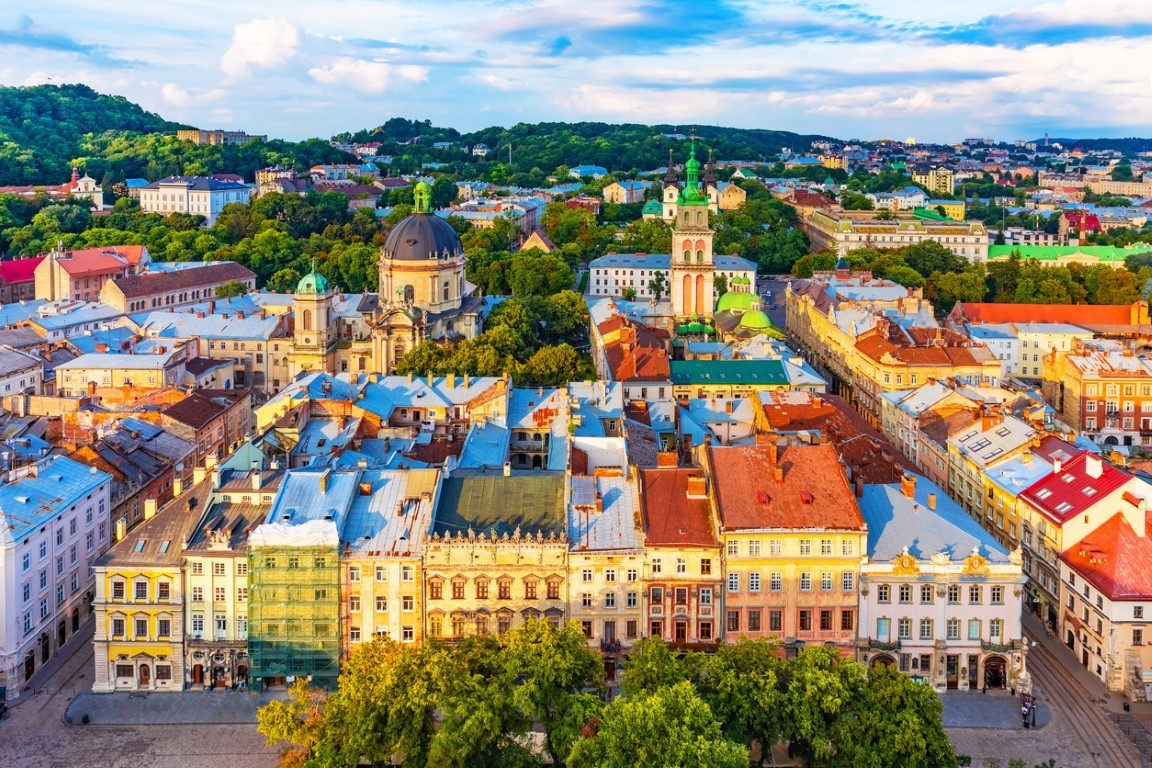
The Ukraine, which borders the Black Sea, between Poland, Romania, and Moldova in the west and Russia in the east, attracts more than 15 million tourists every year. The number of visitors from Eastern Europe used to outnumber those from Western Europe and the USA but the gap is narrowing significantly, partly due to a rise in medical tourism. Prices in Ukraine are extremely competitive, not only for dentistry and infertility treatment but also for accommodation, shopping and transport.
Why consider Ukraine?
Ukraine may not be the first place that springs to mind when you think about a location for your medical tourism break, but it was actually the world’s 7th most visited destination in 2008. It’s slipped down the list since then but has attracted an increasing number of medical tourists.
With such a wealth of natural beauty, cultural tradition and rich heritage, it’s hardly surprising. Take a closer look at this huge, historic country and you’ll find so much to see and do to make your medical trip a holiday to remember. Naturally, most tourists head for the sophisticated beach resorts of the Crimea, but if you only stay there you’ll miss out on some truly spectacular sites.
Ukraine has so many beautiful churches, cathedrals and castles that people were recently invited to take part in a national vote to select the seven wonders of Ukraine. You should try to fit as many of these into your itinerary as possible. The seven wonders include the stunning green and gold domes of St Sophia Cathedral in Kiev, the magnificent Khotyn Fortress and the medieval Kamianets-Podilskyi Historical Complex in the west.
While much of Ukraine’s infrastructure is still recovering from its Soviet past, one area where Ukraine has excelled is in the provision of private medical facilities. Today’s healthcare tourist can expect the highest standards of equipment and expertise, as the Ukraine aims to attract new wealth from Russia and across Europe.
Private dentistry, cosmetic surgery and other medical treatments are all offered at significant savings compared to your own country, with almost no waiting lists. In particular, the Ukraine is becoming well known as a specialist centre for laser eye surgery. Ukraine is also one of the rare countries that supports international surrogacy, providing Ukrainian surrogate mothers and egg donation services at a fraction of the cost of elsewhere in Europe and with very short waiting lists.
Reasons to choose Ukraine
Competitive prices especially for dentistry and fertility
Growing healthcare tourist market
Specialists in IVF and laser eye surgery
Facilities on a par with Western Europe at 20% of the price
7th most visited destination in the world
Beautiful Black Sea beach resorts
The healthcare system in Ukraine
Ukrainian healthcare is run by the Ministry of Health, with all working citizens contributing to the cost. In theory, healthcare is available free of charge to all citizens of Ukraine, however, in practice, the free services only cover basic provision and patients often have to pay for extras such as specialist equipment required during surgery. Often, doctors and consultants will also charge a fee for their time.
Ukrainian public healthcare is still in transition from the Soviet dictated health system of the past. Under this system, capacity was everything, resulting in high numbers of physicians and beds, among the best in Europe, but sadly not the overall standards to match. This is reflected in the relatively low life expectancy of almost 71 overall, with women expected to live, on average, 10 years longer than their male counterparts.
Fortunately, as is often the case in Eastern Europe, the standards of private healthcare are vastly different. With wages for state employed doctors relatively low, and a growing demand for high quality healthcare tourism, many doctors, surgeons and dentists have been tempted over to the private sector, where they enjoy excellent facilities and training.
Private cosmetic surgery and dental care in Ukraine are on a par with the best in Europe, but cost around a fifth of the price. For example, a dental crown can cost just 125 in Ukraine, while breast reduction surgery can cost as little as 1,500.
Two particular specialties in Ukraine are IVF treatment with a course of IVF starting from 1385 in Ukraine. Laser eye surgery, with LASIK eyesight correction starts at around 1500.
Medical tourism is growing rapidly in Ukraine, especially in the capital Kiev, where you can discover a fascinating city full of sights to make a trip of your treatment. In the Black Sea resorts, you can combine treatments with rejuvenating mineral spas, mud baths and traditional sauna-like Russian baths. Combine this with the relaxing scenery of the Crimea and the fresh air of the coast and there are many advantages of travelling to Ukraine for private healthcare.
Transport and accommodation in Ukraine
International flights usually come into the main Boryspil International Airport, which lies around 30 kilometres east of Kiev. The city also has two smaller international airports Kyiv International airport at Zulainy and Gostomel airport, but the latter is primarily an international cargo airport.
As is often the case in large countries, internal travel is common by air, with over 180 airports across the country. Connecting flights can be found from Borispol to Simferopol in the Crimea, with low cost airline Wizz flying one way for just over £25.
For a more relaxing trip, you can cruise from Kiev to the Crimea along the Dnipro River, taking in the rural beauty of Ukraine along the way. Alternatively, The Black Sea ports of Odessa, Yalta and Sevastopol can also be reached by regular ferry from Istanbul in Turkey, offering the opportunity for a two centre medical tourism trip.
Public transport in and around the major cities and tourist resorts is generally good, with Kiev boasting a modern metro system. Taxis are normally good value too, although it is advisable to negotiate the fare before you set off. Taxis are often the most reliable transport for longer distances too, but again you should negotiate your fare in advance. For some journeys you may be able to find a place on a Marshrutky or shared minibus.
Driving in Ukraine is more difficult, with old, unreliable roads and signs in Cyrillic text. Although some new investment has been made in new roads, these amount to fewer than 3,000 of the 100,000 miles of Ukrainian roads in existence. A far safer, and more comfortable, way of exploring is by train, with almost 14,000 miles of track crossing the country.
Accommodation varies hugely as you would expect from such a large country in the process of recovery and expansion. The major Black Sea tourist resorts play host to luxurious spas and retreats and the capital offers the finest quality five-star hotels from major chains including the Hyatt Regency and Radisson SAS. Elsewhere, you will find standards may not reach those you might expect in Western Europe.
A popular alternative to hotels in Ukraine is to rent apartments in the major urban areas. These often represent excellent value for money while giving you far more space than even the largest hotel room. Privacy is the advantage but the downside is that you have to arrange your own food and supplies. A good option if you are travelling with a partner or family group, as you can recover as you need to while they sightsee.
Ukrainian currency is the Hryvna (UAH) and 1 is worth almost UAH11.
About Ukraine
Ukraine is actually the largest country in mainland Europe, stretching from Romania and Hungary in the west to Russia in the east, and from Belarus in the north to the black sea in the south. It also borders Moldova, Georgia and Slovakia.
Once part of the Soviet Union, Ukraine gained independence in 1991 and has been a democratic market economy ever since. But that’s just a small part of its history. Ukraine’s proud heritage stretches back over thousands of years and this is reflected in every town and city through stunning baroque and renaissance architecture and a wealth of museums and historic sites.
Ukraine also boasts a rich cultural heritage, blending folk songs and puppet theatre with world class opera and classical music venues, especially in the capital Kiev. Fast growing in popularity as a European tourist destination, Kiev combines a genuine sense of history and grandeur with all the modern amenities you would expect from a cosmopolitan capital city. You can enjoy many of Kiev’s sites effortlessly by letting them drift by as you cruise the Dnipro River that splits the city.
Beyond the cities, mainland Ukraine forms part of the Asian Steppes, consisting of mainly level, agricultural plains, where life has changed little in decades despite the radical changes in the country as a whole. Plan your visit around the harvest time and you’ll enjoy a true taste of Ukraine at the autumn folk festivals.
Ukraine is not all farmland though. Head to the Carpathian Mountains to the west, and the wetlands of the coast, and you’ll find fascinating National Parks such as Shats’kyi, Podil’ski Tovtry and Cape Mart’yan that are well worth a visit.
For the best of the weather, follow the crowds to the Crimean peninsula, where miles of golden Black Sea beaches enjoy a subtropical, Mediterranean climate. An autonomous region with a character all its own, the Crimea is very much geared for tourism, with beautiful countryside, historic attractions and high quality hotels and resorts. A favourite holiday haunt of wealthy Russians, it is fast becoming a mecca for medical tourism too, combining excellent standards of care with delightful locations and comparatively low prices.
As with many former Soviet states, Ukraine has not fully recovered from the decades of under-investment and exploitation, but it is now well on its way, with new roads and infrastructure investment gathering pace as it moves closer to EU membership.
Clear, practical advice on costs, options, safety and how to choose. Start with the essentials, then dive deeper.
Read the guide